
In Northeast Ohio, the first hard freeze can show up before the leaves are all down. If there's water sitting in your camper's lines when that happens, it expands as it freezes, and that's how you end up with a cracked water line, a split valve or a damaged water heater tank in the spring. The fix is cheap compared to the damage: winterize before the first freeze and you'll open the door in April to a camper that's ready to go.
Here's how we walk camper owners through it.
Why winterizing matters so much here
Our winters swing. It might be 45 degrees on Monday and 15 on Wednesday, and those freeze-thaw cycles are hard on anything holding water. Lines run through cabinets, under floors and inside walls, where you can't see a slow leak until it has already soaked the subfloor. A crack you don't notice in the spring can turn into a soft floor by summer.
What you'll need
- RV antifreeze (the pink, non-toxic kind made for drinking water systems; never automotive antifreeze)
- A water heater bypass kit (many campers already have one)
- A pump converter kit or a short hose to draw antifreeze into the water pump
- Basic hand tools for the water heater drain plug or anode rod
- Optional: an air compressor with a blowout plug, set to low pressure
Step-by-step
- 1Park level and turn things off. Shut off the water pump and the water heater (both gas and electric). Let the water heater cool completely before you drain it.
- 2Drain the tanks. Empty and flush the black and gray tanks at a dump station, then drain the fresh water tank.
- 3Drain the water heater. Remove the drain plug or anode rod (it depends on the brand) and open the pressure relief valve so it drains fully. This is a good time to look at the anode rod if yours has one.
- 4Open the low-point drains. Open the hot and cold low-point drains and every faucet, inside and outside, to let the lines empty. Don't forget the outdoor shower.
- 5Bypass the water heater. Set the bypass valves so antifreeze doesn't fill the water heater tank. Filling it wastes several gallons.
- 6Close the drains. Close the low-point drains and faucets again.
- 7Pump in the antifreeze. Using the pump converter or a hose in the jug, turn on the water pump. Open each faucet one at a time, hot side then cold side, until pink antifreeze runs steady. Start with the closest faucet and work your way to the farthest.
- 8Toilet and drains. Flush the toilet until antifreeze shows in the bowl. Pour a cup or two down each sink and shower drain so the P-traps are protected.
- 9Extras. Ice makers, washing machines and outdoor kitchens have their own steps. Check the owner's manual for those.
- 10Shut it down. Turn off the pump and close everything up.
Some owners blow the lines out with compressed air instead of, or before, using antifreeze. If you do, keep the pressure low and follow your camper maker's guidance; too much pressure can damage fittings.
Don't stop at the water system
- Batteries: Charge them fully. Either remove them and store them somewhere cool and dry, or keep them on a maintainer. A dead battery can freeze.
- Propane: Close the tank valves. If you remove the tanks, cap the connections.
- Tires: Keep them at the proper pressure and out of direct sun if you can. Covers help.
- Food and fabric: Take out every crumb and any food in cabinets. That's what invites mice (we wrote a whole post about that: keeping mice out of your camper).
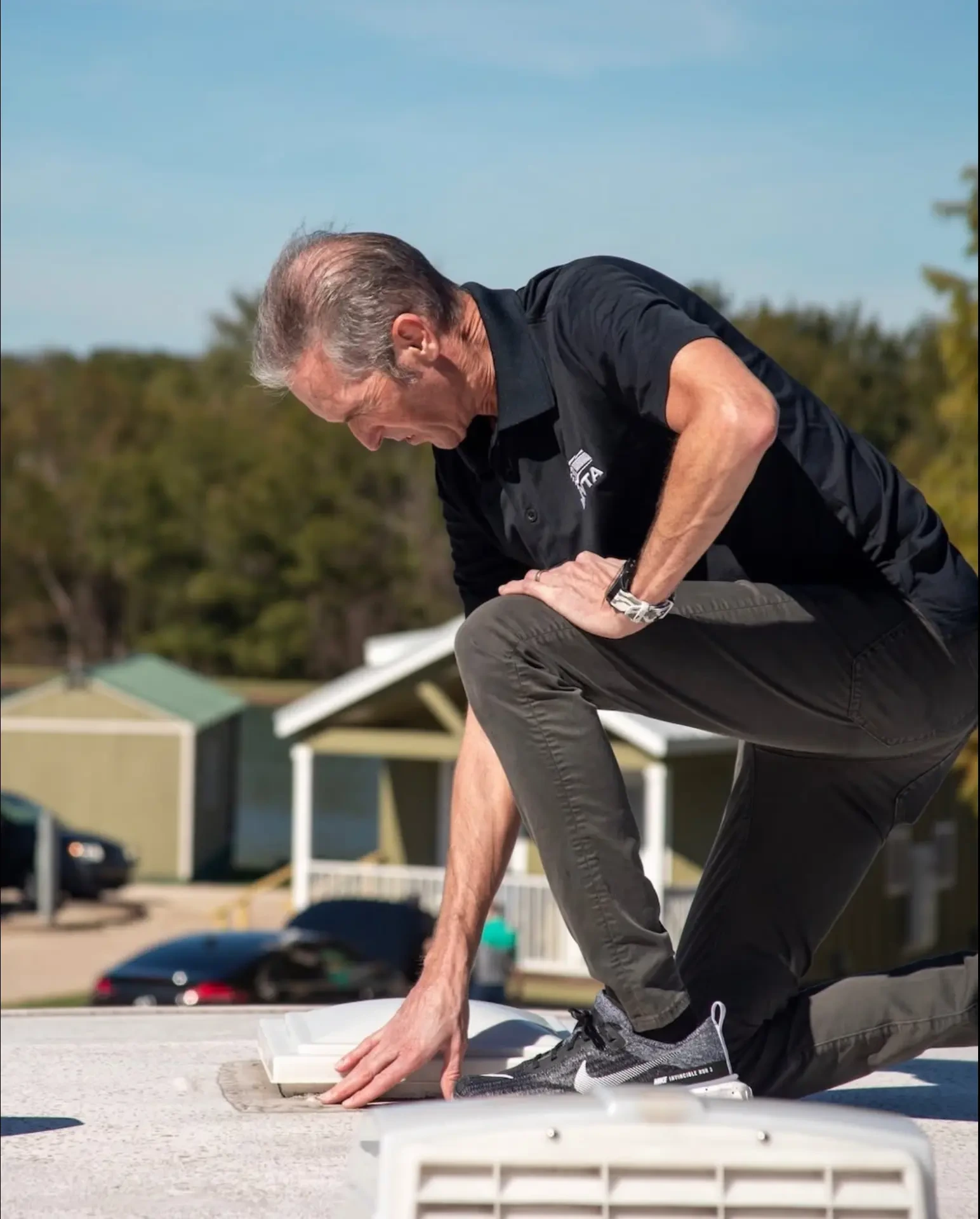
- Roof and seals: Look at the roof sealant, vents and seams before snow sits on them all winter. A small crack now is a leak by March. If you see cracking, a reseal before storage is one of the best investments you can make.
Common winterizing mistakes
| Mistake | What happens |
|---|---|
| Forgetting to bypass the water heater | You use far more antifreeze than needed |
| Skipping the outdoor shower or kitchen | Those lines freeze and crack |
| Using automotive antifreeze | It's toxic in a drinking water system |
| Leaving the low-point drains open after pumping | Antifreeze runs right out |
| Waiting for a "warm week" in December | A surprise freeze beats you to it |
When to let us do it
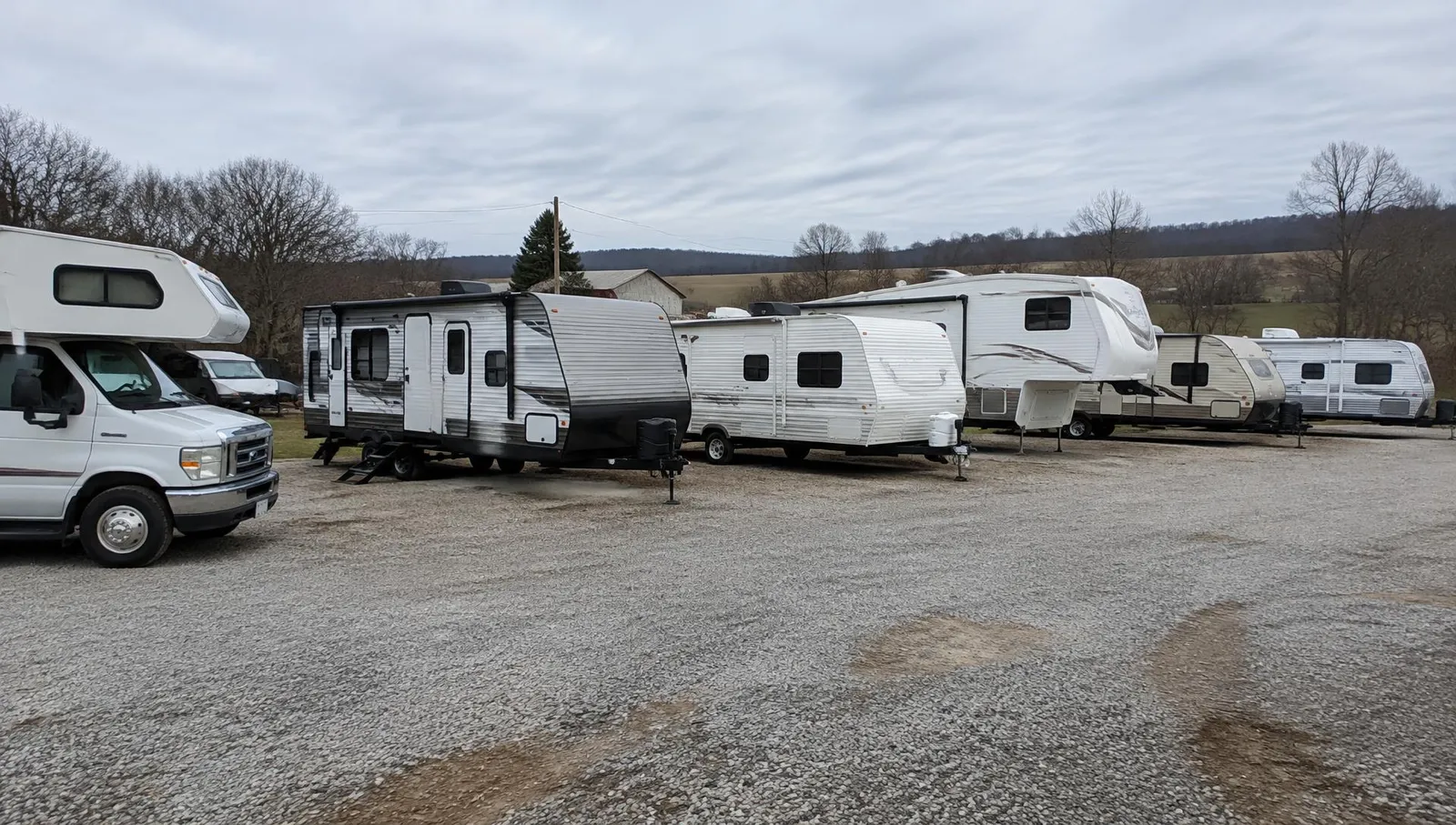
If you're not comfortable with the water heater, your camper has extras you're not sure about, or you'd rather it get done right in one visit, we can handle winter prep as part of our maintenance packages. Many owners pair it with a roof check and rodent undercoating so the camper goes into storage sealed up. We also offer storage on site at our Atwater shop.