
When a camper comes into our shop with a soft floor, a bubbled wall or a sagging ceiling, the damage almost always started with a small leak somewhere higher up. Water gets in slowly, soaks into wood you can't see, and by the time it shows, it has often been there for months.
Finding leaks early is the single best thing you can do to protect a camper. Here's how.
Where leaks usually start
Water finds the weakest seal. The usual suspects:
- Roof seams and edges where the roof meets the front and rear caps and the sidewalls
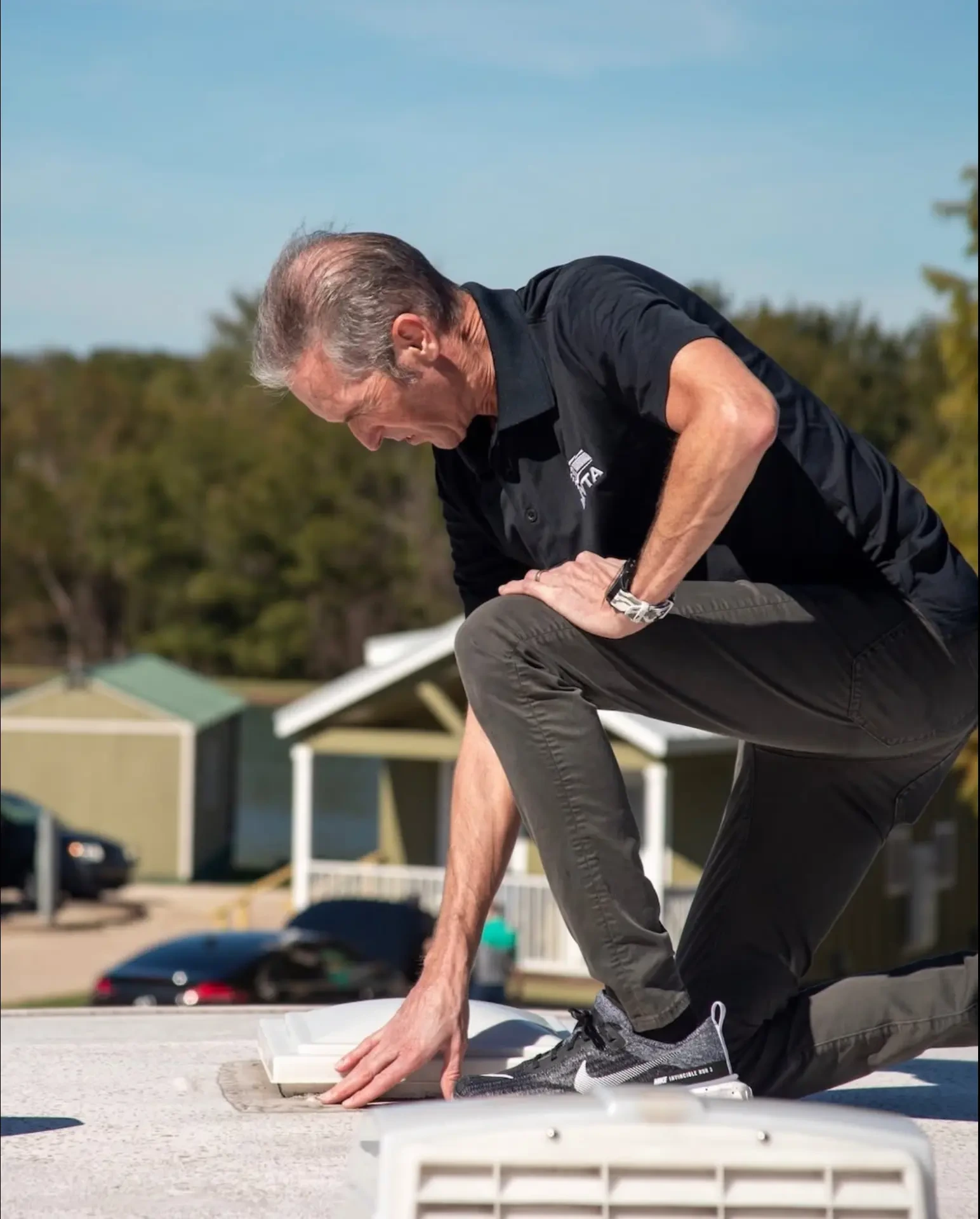
- Roof vents, skylights and the A/C unit gasket and mounting
- The front cap, especially on travel trailers that face the weather when towed
- Windows and doors, where the frame meets the wall
- Clearance and marker lights, which are small but have screw holes through the wall
- Slide-outs, around the seals and the top of the slide box
- Ladder mounts, antennas and anything screwed into the roof or walls
Early warning signs
Walk through your camper with a flashlight and look for:
- Water stains or discoloration on the ceiling, walls or around windows
- Soft spots in the floor, especially near doors, the front and wheel wells
- Wallpaper or paneling that's bubbling, wavy or peeling
- Delamination on the outside walls: bubbles or waves in the fiberglass
- Rusty screw heads around trim, vents or windows
- A musty smell that doesn't go away when you air it out
- Ceiling panels that sag or feel spongy when you press gently
Press around window corners, around the base of the walls and on the floor in front of the door. If something gives, there's probably moisture behind it.
Check the outside
- 1Look at the sealant. On the roof edges, vents and seams, sealant should be soft and complete. Cracks, gaps, peeling or dried-out spots are where water gets in.
- 2Use a ladder. Many camper roofs are not meant to be walked on. If you're not sure yours is, inspect from a ladder at the edges.
- 3Check the caps and trim. Look where the front and rear caps meet the sidewalls.
- 4Look at the windows. Check the seal around every window and door frame.
- 5After a rain, check inside right away. Fresh dampness tells you exactly where to look.
A moisture meter (sold at hardware stores) helps a lot: higher readings in one area point you to the source.
How often to check
At least twice a year: in the spring when you take it out of storage, and in the fall before you store it. Ohio winters, with snow sitting on the roof and freeze-thaw cycles, are hard on sealant, so the spring check is the one not to skip.
What happens if you wait
Water that stays in the structure leads to rot, and rot spreads. A leak that would take a little sealant to stop today can mean a floor replacement or roof work later. If the roof itself is worn out, we do complete roof replacement and roof coatings.
When to bring it in
If you see stains, soft spots or delamination, the damage is already started. The important part is finding the source, not just patching the stain. When we look at a camper, we track where the water is coming from first, then fix the source and the damage.